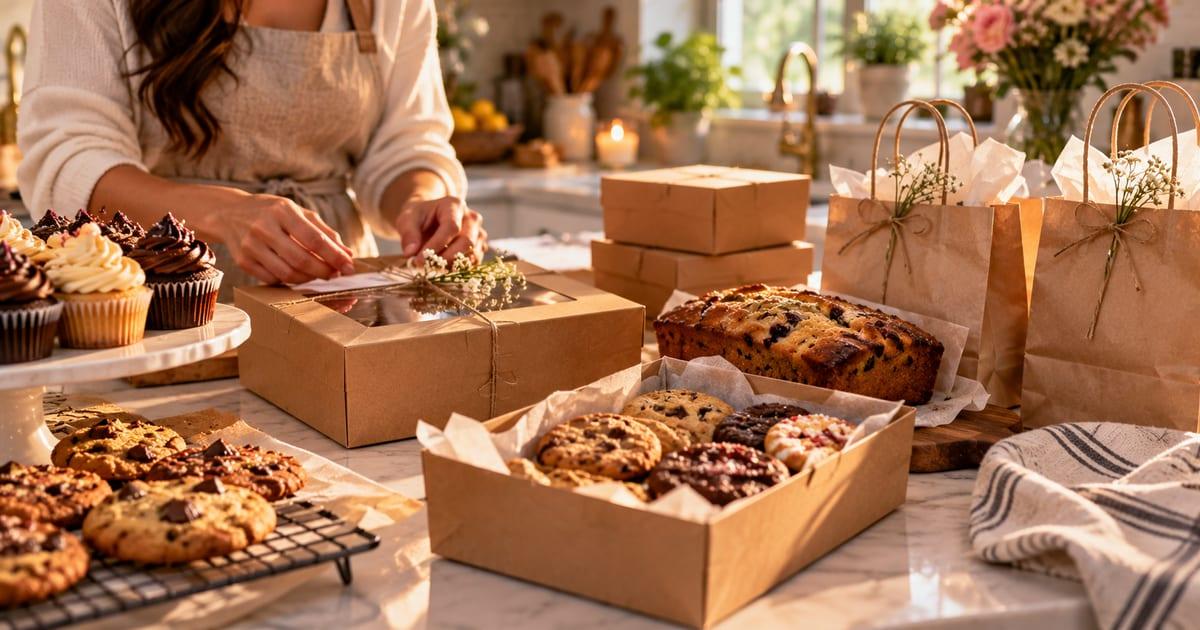
Step 1: Check your state and local rules
A home bakery sells baked goods made in a home kitchen. Your state's cottage food path determines which recipes you can offer, where you can sell them, and whether you need registration or a permit. Start with the state-by-state reference, then confirm your menu with the linked agency.
A cookie and a cream-filled cookie may need different approvals. Ask about the actual recipe, filling, frosting and storage conditions, especially for refrigerated desserts. Write down the answers before buying printed packaging or promising a delivery service.
- Food and kitchen: which products fit, and whether training, inspection or recipe review is required.
- Sales and labels: the cap and its basis, approved channels, required label fields and any address alternatives.
- Local requirements: business licensing, zoning, lease or HOA restrictions, and market rules if you plan to attend an event.
A food registration is separate from a local business license. The license checklist explains the distinction. Use the full guides below for these states, or find any other state and DC. The table describes the listed cottage food path; a broader home-bakery permit can have different conditions.
| State | Sales limit | Registration |
|---|---|---|
| California | $88,878gross/year | Required |
| Florida | $250,000gross/year | Not required |
| Ohio | No limit | Not required |
| Texas | $150,000gross/year | Not required |
| New York | No limit | Required |
Step 2: Set up your kitchen and a small menu
Choose products you can repeat with the equipment and time you already have. Test the recipe, portion size, packaging and holding time together: a decorated cookie that breaks in its bag is not ready for pickup. Keep notes on yield and active work so your first price uses measured costs.
Organize the kitchen around a batch moving from ingredients to finished orders. A household kitchen also has family meals and limited counter space to accommodate. The kitchen setup guide helps you plan storage, cleaning and production without treating a new appliance as the first step.
- Separate and label business ingredients and finished orders so they are easy to find.
- Weigh recipe ingredients and record the yield; keep supplier labels for ingredient and allergen information.
- Choose food-grade packaging that protects the item during the intended trip.
- Draft labels with the cottage food label template, then check them against your agency's requirements.
- Photograph the actual item and package customers will receive, using a clear background and available light.
Before buying equipment, time a practice batch through cleanup. If the oven, cooling space or packaging time limits output, reduce the order quantity or simplify the menu first.
Step 3: Price a batch with your labor included
Add ingredients, packaging and labor for a batch, divide by the number of sellable items, then allow for overhead and profit. Use the time you actually spend, including shopping, messages, cleaning and handoffs. A price that covers flour and butter can still leave you working for nothing.
- Ingredients: count what the recipe uses, including decorations and test losses.
- Packaging: include the box or bag, liner, label and any insert.
- Labor: enter the hours and the hourly pay you want the batch to support.
- Overhead and markup: allow for operating costs, then add your chosen markup. Markup on cost is different from profit margin on sales.
The example below uses the pricing calculator's starting numbers. It shows the method, not a market price.
| Cost or price | Calculation | Per item |
|---|---|---|
| Ingredients | $18.00 ÷ 24 items | $0.75 |
| Packaging | Per item | $0.35 |
| Owner labor | 1.5 h × $20/h ÷ 24 | $1.25 |
| Base cost | Ingredients + packaging + labor | $2.35 |
| Overhead | 15% of base cost | $0.35 |
| Total cost | Base cost + overhead | $2.70 |
| Price with markup | Total cost + 40% | $3.78 |
| Rounded price | Nearest quarter dollar | $3.75 |
Selling the full example batch at the rounded price brings in $90.00 before costs. The labor allowance pays for the entered hours; it is not extra profit. Replace these assumptions with your own in the baked goods pricing calculator.
Step 4: Choose where customers will find you
Start with a channel where you can reach local buyers and explain the pickup arrangement. Match it to the sales methods your state permits. A place to discover your baking and a place to place an order can be different tools.
- People you know: share a specific offer with friends, neighbors or coworkers who want to hear about it. Ask for honest feedback on the product and the ordering experience.
- Instagram: show the finished item, price and pickup details, then direct buyers to the order path. The Instagram selling guide covers the setup.
- Local groups and Facebook Marketplace: check group rules and platform policies as well as your state path. The Facebook food-selling guide explains the questions to check.
- Farmers markets: ask the organizer about food eligibility, fees, insurance and packaging before committing. Include stall time, transport and unsold stock in your cost estimate.
- Your own ordering page: keep the menu, quantities, payment and pickup details in one place that you can share from your other channels.
The sell-food-online guide compares these routes. Avoid building a separate menu and payment process for every social channel: customers need a clear next step, and you need a reliable record of what they ordered.
Step 5: Take your first orders on a schedule you can keep
Set your available work hours first, then choose an order cutoff and pickup window. That lets you buy ingredients and bake in batches. Leave room for cooling, labeling, cleanup and a customer arriving late; a schedule that counts only oven time will overfill quickly.
For an illustrative first offer: post a photo of a cookie box with its contents and price, close orders on Friday, and offer Saturday pickup during a stated window. Set the quantity from your practice batch and the hours you have.
- Publish the item, quantity, price, allergen information, order deadline and pickup details together.
- Collect the buyer's contact details, items, quantities, requested date and any agreed custom details. The bakery order form provides a field checklist.
- State when an order is confirmed, when payment is due, and your cancellation or change policy.
- Keep one production list with quantities, payment status and handoff details; check it before shopping and again before pickup.
- After fulfillment, ask whether the order met expectations and whether the customer wants to hear about the next menu.
For seasonal batches, use holiday preorders to plan the cutoff and pickup workload. If messages are getting hard to reconcile, compare the options in best app to sell homemade food. There is no universal order count at which you need software: change the process when it stops keeping your commitments clear.
VibeKitchen supports your own storefront, payments and order tracking. If your menu works better cooked after an order arrives, the made-to-order guide explains that workflow. Choose the approach that fits the food and the hours you can reliably offer.
Step 6: Fill in a business plan and startup checklist
Keep the first plan short enough to use while preparing an actual batch. Fill these fields with your own choices; blank spaces reveal decisions you still need to make.
- Menu: I sell ___; I am not offering ___ yet.
- Customer and channel: my first buyers are ___; they will find the menu at ___.
- Rules: my agency is ___; approved products and sales methods are ___; renewal or sales-cap checkpoints are ___.
- Costs and price: a batch costs ___ including ___ hours of labor; it yields ___ sellable items at ___ each.
- Schedule and capacity: orders close ___; I bake ___; pickup is ___; I can fulfill ___ orders with the available time.
- Order and payment: customers order at ___; an order is confirmed when ___; my change policy is ___.
- Review: after each selling week I record ___; I contact interested repeat buyers by ___.
Use this startup checklist before opening the first order window:
- Confirm products, registration or permits, training and local requirements.
- Test the menu and package; draft and check labels.
- Record ingredient costs, packaging costs, labor and starting prices.
- Set a quantity limit, order deadline, pickup window and payment policy.
- Photograph the offer and choose the first sales channel.
- Test the order form or ordering page from a customer's perspective.
- Prepare the production list and a way to record payments and expenses.
- Decide how customers can give feedback or opt in to future menu updates.
Step 7: Review profit before adding more orders
A home bakery can be profitable, but sales volume alone does not tell you whether it pays you fairly. Compare revenue with all costs and all working hours. The pricing example includes an owner-labor allowance; if you enter fewer hours than you actually work, its apparent surplus overstates the result.
- Record ingredients, packaging, payment charges, market costs, delivery and other business expenses.
- Track shopping, baking, decorating, messages, cleanup and pickup time.
- Compare the planned batch yield with what was actually sold; account for waste and refunds.
- Keep business records separate from household spending and check the relevant tax rules.
The IRS business-starting checklist is a starting point for federal tax questions; your state revenue department handles state taxes. Ask an insurer whether your existing policy covers business food production and what an appropriate policy would cover.
If a product leaves too little after costs and owner pay, try changing the portion, batch size, decoration work or price before accepting more of it. Review what customers bought again and what took longer than expected. Expand the menu only when the extra work fits your kitchen, sales path and schedule.
Frequently asked
Common questions.
Do I need a business license to start a home bakery?
A local business license is separate from cottage food registration or a food permit. Check your city or county licensing office as well as your state food agency. Requirements and fees depend on where you operate.
How do I start a bakery business from home?
Confirm the rules for your menu, test a small batch, and set a price that includes packaging and labor. Choose where buyers will find you, how they will order, and when they can collect the food. Use the startup checklist above to test the process before opening orders.
How much money do I need to start a home bakery?
Build a budget from the equipment you already have, ingredients for a test batch, packaging, labels and any required registration or training. Add actual quotes for insurance, market space or other services you plan to use. There is no single startup total that fits every menu and jurisdiction.
How much can I make with a home bakery?
Use your own expected sales, costs and available hours to model the result. The worked example above illustrates a price calculation, not typical earnings. Count owner labor and check any applicable sales cap before planning to increase output.
Is a home bakery profitable?
It can be, when paid orders cover operating costs and leave enough to pay for your time. An ingredient-only margin is not the same as profit after packaging, overhead, waste and owner labor. Review actual batches before deciding to scale.
What do I need to start a home bakery besides knowing the rules?
A repeatable product, suitable packaging and labels, clear photos and prices, and a way to record orders and payments. You also need a production schedule and pickup arrangements that fit your household. Test the whole process with a practice order.
How do I handle the tax side of a home bakery?
Keep records of business income and expenses from the start. Check federal guidance and your state revenue department for the taxes that apply to your business structure and products. A tax professional can help you estimate payments using your actual circumstances.
What is the biggest mistake first-year home bakers make?
One avoidable mistake is setting a price from ingredient costs alone. Record packaging, overhead and the full time spent on each batch, then check whether your price supports the work. There is no universal ingredient multiplier that replaces that calculation.