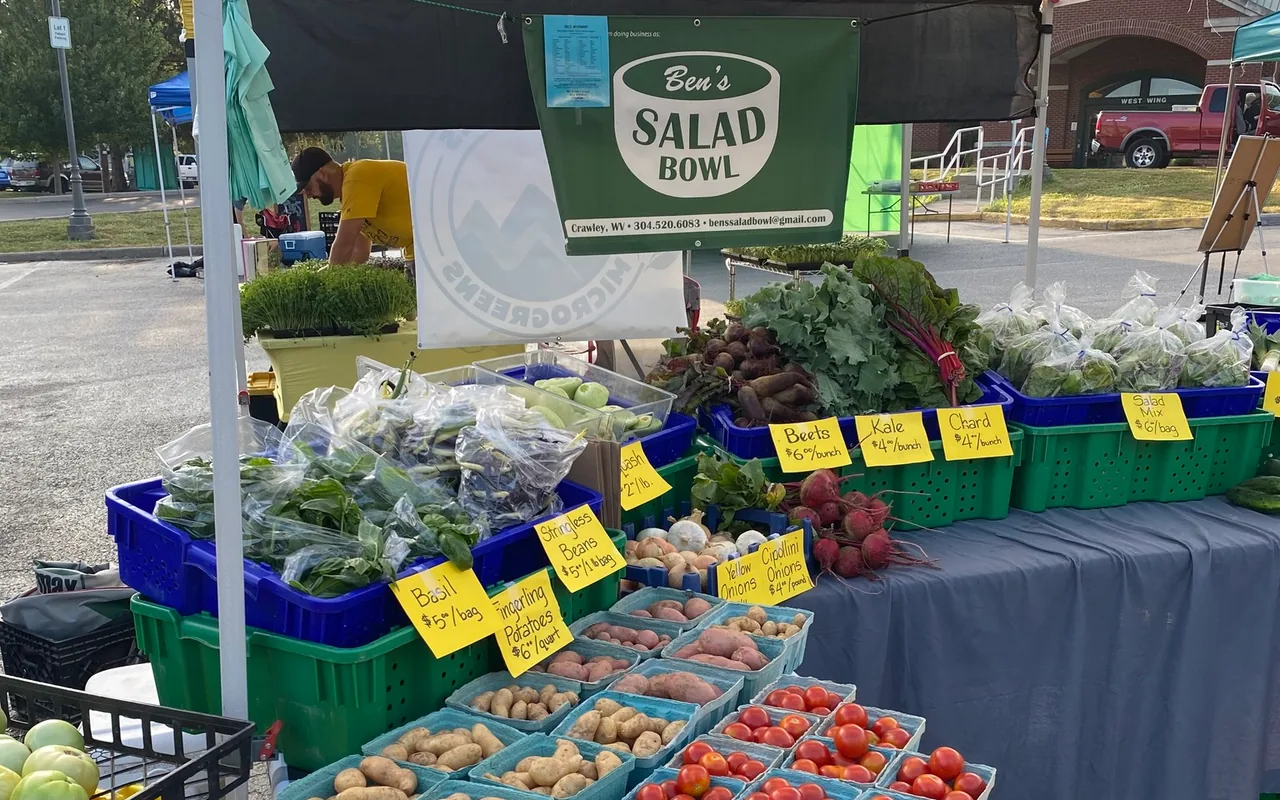
What happened
What changes in West Virginia cottage food law on June 12?
On June 12, 2026, West Virginia cottage food law adds a new WVDA permit path for potentially hazardous cottage foods under SB 44. Nonpotentially hazardous foods stay under the existing no-permit path. Meat, poultry, seafood, and Grade A dairy remain outside the new cottage food definition, and Article 40 sales stay in West Virginia.
The bill was passed on March 14, 2026, approved by the governor on March 27, 2026, and becomes effective 90 days from passage. The law now separates shelf-stable foods from higher-risk foods: West Virginia keeps its existing path for nonpotentially hazardous foods with no state permit, no inspection, and no revenue cap under W. Va. Code §19-35-6. Then it adds Article 40, W. Va. Code §19-40-1 through §19-40-6, for potentially hazardous cottage foods regulated by the West Virginia Department of Agriculture.
That matters if your menu has been boxed into cookies, breads, dry mixes, candies, and other shelf-stable foods. West Virginia Watch reported that the new path may include acidified, pickled, fermented, and time-and-temperature-controlled foods with requirements such as a permit, inspection, food safety training, and water testing for non-municipal water sources. Those details still need to be tied back to WVDA's Article 40 rules.
Seller impact
For some menus, this changes what you can sell.
For a home food seller, the difference between shelf-stable and potentially hazardous can decide the whole business. A dozen cookies? Usually straightforward. Pickled vegetables, fermented hot sauce, a refrigerated dessert, or anything that needs temperature control? That is where a lot of creative sellers hit the wall.
SB 44 does not make every recipe legal overnight. It creates a door, then tells WVDA to write the rules for who can walk through it.
| Product lane | What changes |
|---|---|
| Nonpotentially hazardous foods | The existing West Virginia cottage food path remains in place under W. Va. Code Section 19-35-6. |
| Potentially hazardous cottage foods | A new WVDA permit path begins June 12, 2026, with permit conditions, product standards, and fees still coming through WVDA rules. |
| Current farmers market PHF products | WVDA public materials already point to inspection, label review, approved training, process authority paperwork for certain foods, and form-specific fee instructions for the older farmers-market vendor path. |
| Meat, poultry, seafood, Grade A dairy | Still excluded from the new cottage food definition. |
| Out-of-state sales | Article 40 cottage foods must be sold only inside West Virginia. |
The enrolled bill says a potentially hazardous cottage food vendor permit is valid in every West Virginia county. That matters. A seller in Berkeley County should not need one permit to sell locally and a different one to sell at an event elsewhere in the state. But Article 40 cottage food still has to stay in West Virginia.
The opportunity
Which menus does SB 44 help most?
A home baker who only sold cupcakes may now be watching the rules for cream-filled items. A gardener with too many peppers may be thinking about fermented hot sauce. A farmers market seller who already has loyal customers may be planning a second table, a cooler, and a tighter production calendar.
Careful, though. The useful move right now is not to launch everything on June 12. The useful move is to build a permit-ready menu.
Sort your ideas into three piles: keep selling under the existing nonpotentially hazardous food rules, prepare potentially hazardous products for the new WVDA permit path, and cut anything the law still does not allow, especially meat, poultry, seafood, and Grade A dairy.
Menu sorting
Which West Virginia cottage foods fit each lane?
This is the evergreen work. Before you order labels or post a new menu, sort each product into the lane it probably belongs in. The table below is not WVDA approval. It is the seller-friendly version of "pause here and check the rule."
| Product idea | Likely lane | What to do now |
|---|---|---|
| Plain cookies, breads, cakes, candies, dry mixes | Existing nonpotentially hazardous path | Use the current West Virginia cottage food rules and labeling standards if the product does not need time or temperature control. |
| Salsa, pickled vegetables, fermented hot sauce, acidified sauces | Article 40 permit path to watch | Expect WVDA to care about process authority paperwork, label review, training, and inspection because those already appear in farmers-market PHF materials. |
| Kombucha, sauerkraut, kimchi, other fermented foods | Wait for WVDA product standards | Treat these as permit-only candidates until WVDA says which Article 40 products qualify and what testing or handling proof is required. |
| Cream-filled pastries, cheesecake, custards, meringue pies | Do not assume | These sit in the higher-risk zone. Wait for WVDA details, especially where dairy ingredients, cold holding, or fillings are involved. |
| Jerky, meat sauces, poultry dishes, seafood products | Still outside cottage food | SB 44 excludes meat, meat products, poultry, poultry products, seafood, and fish from the new cottage food definition. |
| Milk, cheese, ice cream, Grade A dairy products | Use another regulatory path | Grade A dairy products remain outside Article 40 cottage food. Check WVDA dairy or food-establishment requirements instead. |
Demand signal
Search interest is scattered, but seller interest is real.
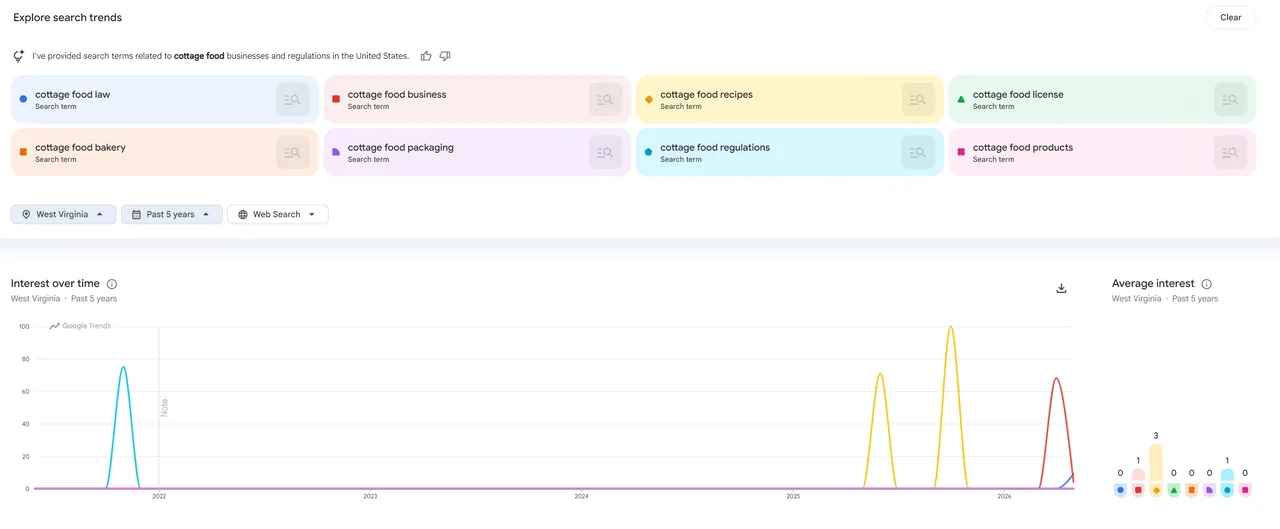
A West Virginia-only Google Trends capture from June 3, 2026 shows low average interest for cottage food searches over the past five years, with isolated spikes around recipes, regulations, business, and law. I would not read that as "nobody cares." I would read it as people being interested, but not all searching for the same term.
The policy push was not quiet. The Institute for Justice said it helped organize more than 100 homemade food producers across West Virginia to share their stories with lawmakers. That is why this update focuses on the practical questions sellers will still have after June 12: which products fit, which permit applies, and what WVDA publishes next.
Action list
What West Virginia sellers should do now.
Start with your menu, not the paperwork. Four moves get you permit-ready before June 12.
Sort your menu, not your paperwork
Write down every product you sell or want to sell, then mark each one as shelf-stable, refrigerated, pickled, fermented, acidified, or temperature-controlled. If you do not know where something lands, assume it needs review before you sell it.
Get your labels in order
West Virginia's existing cottage food rules already care about labeling, and SB 44 says potentially hazardous cottage foods must follow Department of Agriculture labeling standards. Check name, address, ingredients, allergens, net weight, and any WVDA disclaimer before you print a big roll.
Watch WVDA before you sell the new items
The law creates the permit path, but WVDA still has to set the conditions and procedures. Look for the Article 40 permit application, fee schedule, inspection process, training details, product categories, and label rules.
Tighten how you take orders
If SB 44 lets you add products that need pickup windows, delivery timing, cold holding, or limited weekly batches, DMs and notebook math will get ugly fast.
Useful next reads: West Virginia cottage food law, cottage food rules by state, license and registration checklist, and cottage food label template.
Step four is the part VibeKitchen handles. Start for free →
Next
WVDA rulemaking is the next thing to watch.
SB 44 gives the Department of Agriculture the job of setting the conditions and procedures for potentially hazardous cottage food permits, including fees. The bill also allows local health departments to stop production if there is reason to believe an imminent health hazard exists, in consultation with WVDA.
Watch for details on permit applications, inspections, training, water testing, product categories, fees, and label rules. The Institute for Justice, which supported the bill, called SB 44 “one of the most expansive cottage food laws in the nation” and frames it as a step toward broader food freedom. For sellers, the near-term win is simpler: June 12 opens a new legal path.
Implementation watch
- June 3, 2026: SB 44 is enrolled and effective June 12. WVDA's existing farmers-market guidance still gives the clearest published clues for inspection, label review, training, process authority paperwork, and permit handling, but Article 40 permit rules are still the next item to watch.
- Likely page to watch: WVDA Food Products and Aquaculture Licenses, where related food product and farmers-market permit links already live.
- Next check: Article 40 application form, fee schedule, kitchen options, product categories, process authority expectations, water testing, training, label wording, and whether WVDA treats the current farmers-market vendor permit as separate from the new cottage food permit.
Sources: West Virginia Legislature enrolled SB 44, West Virginia Legislature bill history, West Virginia Watch, West Virginia Department of Agriculture Food Products and Aquaculture Licenses, West Virginia Department of Agriculture farmers market guidance, West Virginia Department of Agriculture farmers market vendor permit application, the National Agricultural Law Center, and the Institute for Justice.
FAQ
West Virginia cottage food law questions.
Will West Virginia sellers need both a farmers market vendor permit and the new cottage food permit?
Yes, if they intend to use both programs. The current farmers market vendor permit and the new SB 44 potentially hazardous cottage food permit serve separate purposes. Until WVDA publishes Article 40 instructions, treat them as separate permissions rather than substitutes for each other.
Where should I look for the new West Virginia potentially hazardous cottage food permit application?
WVDA now publishes the application on its Potentially Hazardous Cottage Foods page. Obtain the permit before selling these foods; WVDA requires a kitchen inspection and may require process approval for your recipe.